
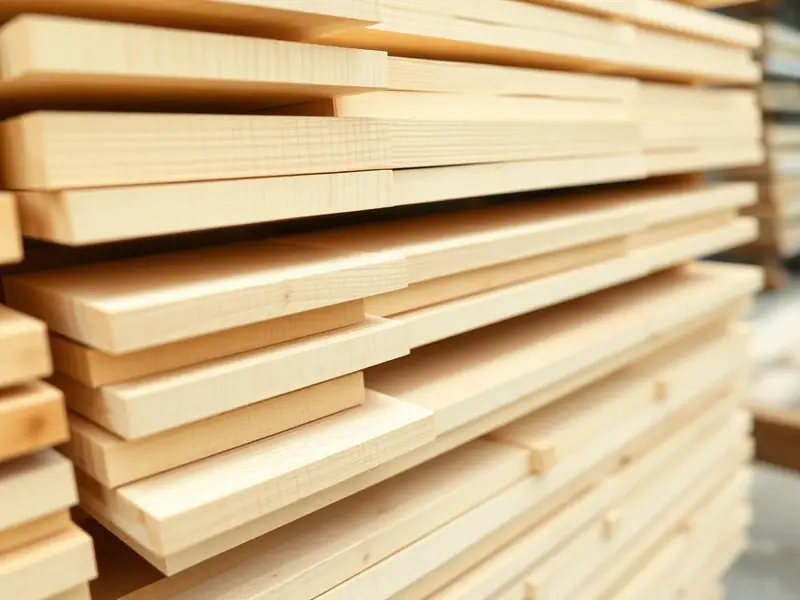
Poplar
The paint-grade hardwood — smooth, stable, and almost grainless under a sprayed finish.
A hardwood that behaves like a painter's dream
Poplar is technically a hardwood, but it is one of the softer ones — which is exactly why it is the trim and millwork standard across the country. It is dense enough to hold a crisp milled edge and soft enough to cut, nail, and sand without fighting it.
The reason people specify it is the surface. Poplar has a fine, uniform texture with very little grain contrast, so a sprayed paint finish lays down dead flat. There is no earlywood-latewood telegraph coming through the film a year later, and no knots bleeding tannin through the primer. If you want a wall that reads as a single painted plane with only the profile's shadow line showing, poplar is the material.
Color, stability, and what to expect
Raw poplar runs creamy white through pale tan, often with green, gray, or purple mineral streaks in the heartwood. Those streaks are natural and completely covered by paint — which is the point, since almost nobody clear-finishes poplar.
It is dimensionally stable indoors, holds fasteners well, and does not move much once acclimated. Standard practice still applies: let it sit in the conditioned space for a few days before you hang it.
Poplar is an interior wood. It has no natural decay or insect resistance, so it should never be used on exposed exterior work. That is what cypress is for.
Best uses for poplar
Painted shiplap and V-joint walls
The premium pick when the finish is white or a deep saturated color and you want zero grain showing through.
Painted ceilings and coffers
Flat painted ceilings where any grain telegraph would catch the light and give the material away.
Wainscot, trim, and built-ins
The traditional millwork hardwood. Machines crisply, takes a hard-wearing enamel, and matches standard trim stock.
Detail work in high-end interiors
Where a designer specified a painted finish and the budget supports the upgrade over primed pine.
Where we would steer you somewhere else
- Any exterior or unprotected exposure — poplar has no decay resistance
- Clear or stained finishes, since the mineral streaking is unpredictable
- Surfaces that take hard impacts, like stall fronts or shop walls
Stock and lead time
- Special order in tongue & groove, V-joint, and shiplap profiles.
- Typical lead time is one to three weeks depending on width and quantity.
- Other hardwoods can be milled to the same profiles on request — call us with the species and the spec.
Call (352) 895-9950 with your square footage and we will confirm what is on the ground before you plan the job.
Which grade to order
- Paint Grade
The standard order. Sound boards with typical mineral streaking, milled for a flat painted face.
- Select
Cleaner, more consistent color for exposed trim runs and premium millwork. Available on request.
How to finish it
- Prime with a quality bonding or shellac-based primer, then sand lightly before topcoat.
- Sprayed enamel gets the flattest result; a fine-nap roller is a close second.
- Skip clear finishes — the mineral streaks are unpredictable and rarely what people expect.
Milled in poplar
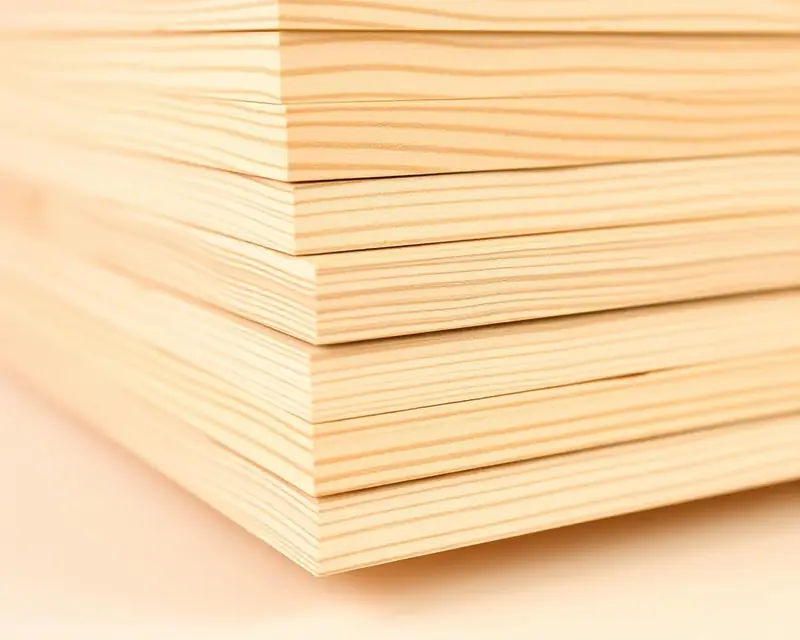
A milled tongue on one edge and a matching groove on the other, so boards lock together and hide every fastener.
View Tongue & Groove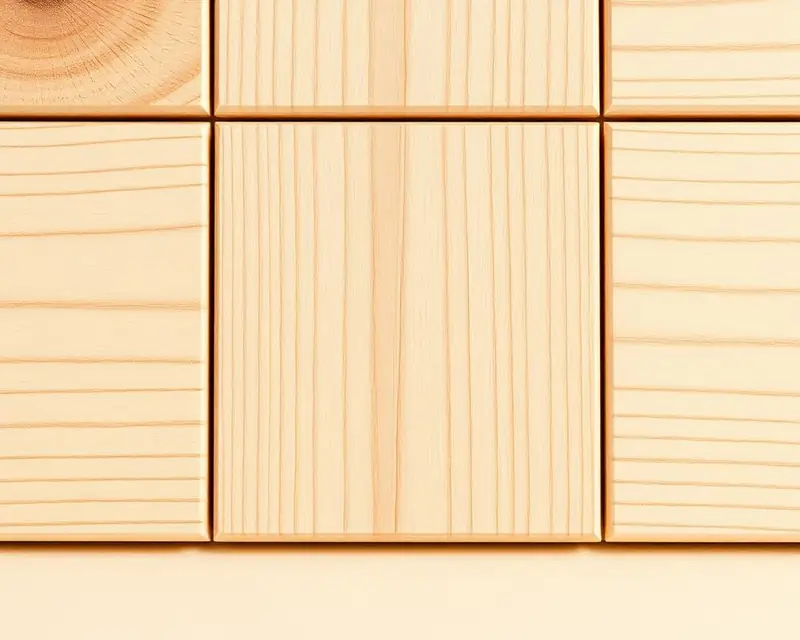
The same locking tongue and groove joint with a chamfer milled on each edge, giving a crisp V-shaped shadow line at every seam.
View V-Joint
An L-shaped rabbet cut into each long edge so boards lap over one another and sit flat, leaving an even reveal at every joint.
View Shiplap SidingOther species we mill
Thinking poplar?
Tell us the room, the square footage, and the finish you are after. We will tell you straight whether this is the right species for the job.
Locally yours — Ocala, FL.