
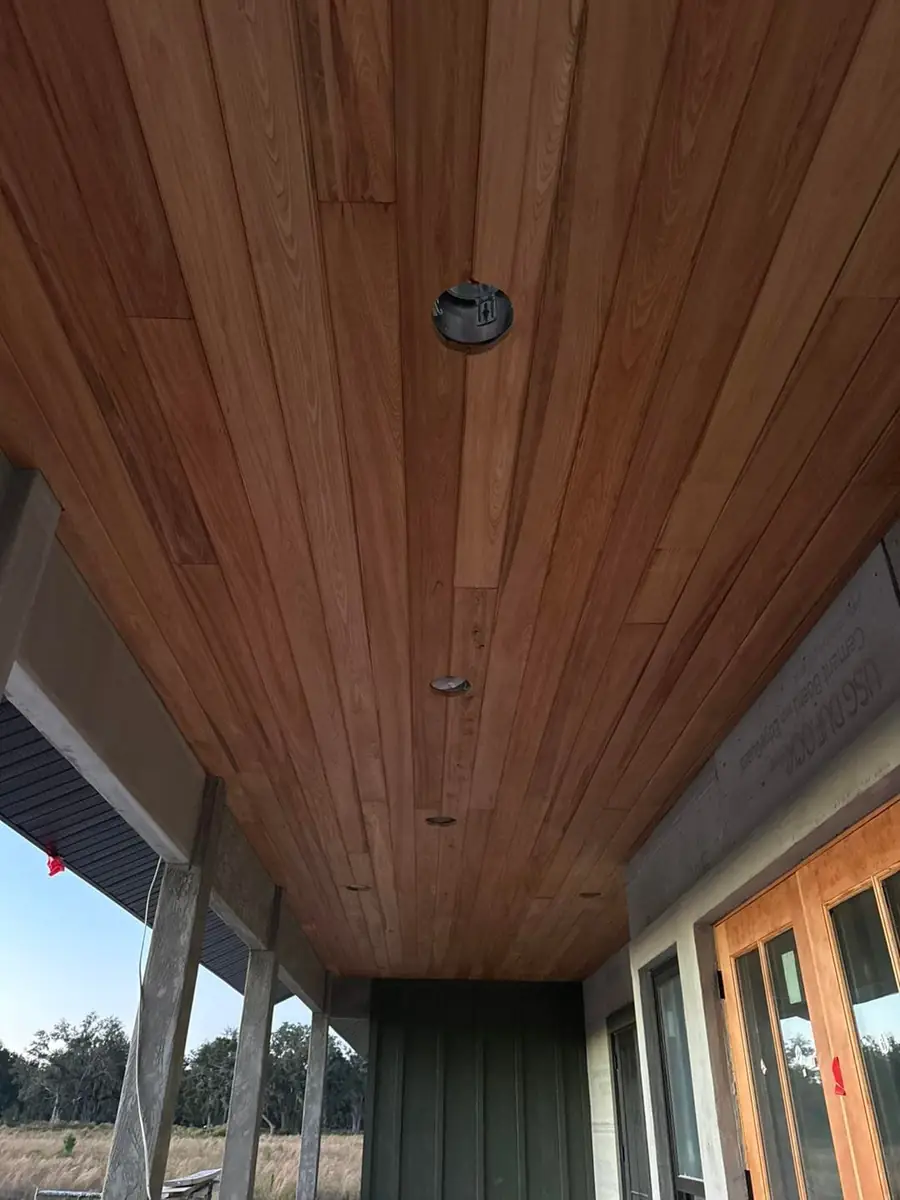
Cypress
The upgrade species for anything that sees weather — naturally rot and insect resistant with no chemical treatment.
Why cypress resists rot
Bald cypress grows in standing water across the Southeast, and the heartwood carries a natural oil — cypressene — that fungi and insects will not touch. That resistance is built into the wood rather than pressure-injected into it, so there is nothing to leach out and no treatment schedule to keep up with.
Practically, that means cypress will take a Florida summer of driven rain and dew cycles without the rot that ends an untreated pine board. Old cypress porches and outbuildings around Marion County are still standing after fifty and sixty years, which is a better argument than anything on a spec sheet.
Look, weight, and workability
Cypress runs lighter in both color and weight than Southern Yellow Pine — pale honey to a soft tan, with a subtler grain. Under a clear finish it stays lighter as it ages instead of ambering hard, which is why designers reach for it on bright coastal and modern porches.
It is a soft, even-textured wood that cuts and machines cleanly and holds a milled profile well. It dents more easily than pine, so it is a better ceiling and siding wood than it is a floor or a stall front.
Left unfinished outdoors, cypress weathers to a silver gray without losing structural integrity. Sealed or oiled, it holds its original color; either path is legitimate, and the choice is purely about the look you want.
Pecky cypress
Pecky cypress is the specialty grade — boards with irregular pockets left by a fungus that only attacks the living tree and dies the moment the log is milled. The pockets are permanent character, not active decay, and they give a wall or a ceiling a texture nothing else replicates.
It is a designer favorite on feature ceilings, restaurant walls, and bar fronts. Supply is genuinely limited, so if pecky is the look you want, call early and we will source it against your board count.
Best uses for cypress
Exposed porch and pavilion ceilings
The single best use of cypress in Florida. Blowing rain and humidity are exactly what it shrugs off, with or without a finish.
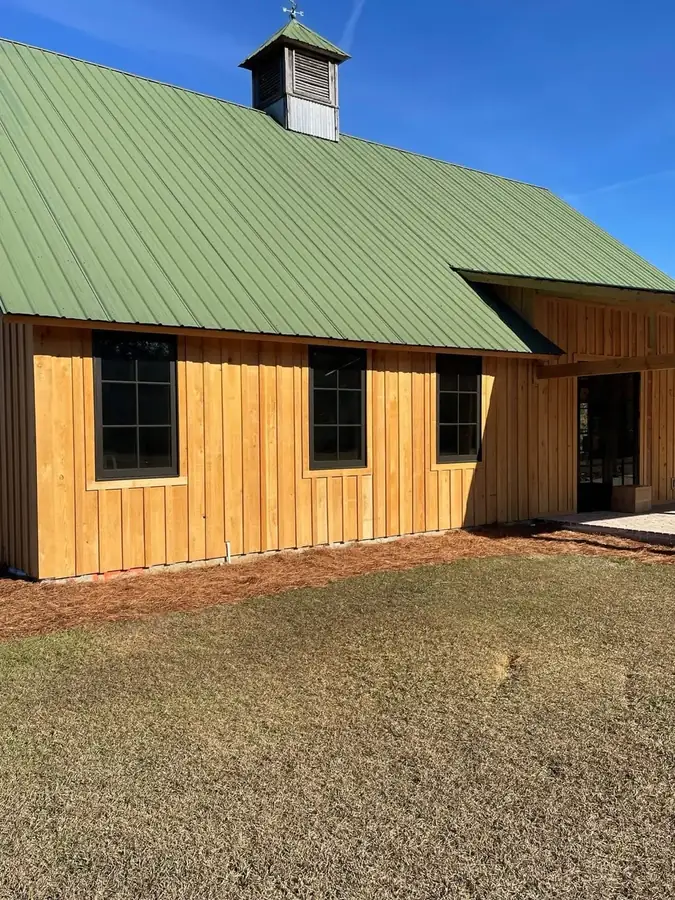
Exterior siding and soffits
Shiplap in cypress on a wall that catches weather will outlast painted pine by decades, and it holds a stain or oil finish well.
Outdoor living and pool areas
Cabana ceilings, outdoor kitchens, and pool pavilions where humidity never lets up and repainting is a hassle nobody wants.
Feature ceilings with pecky character
When the texture is the design, pecky cypress does something no pine board can imitate.
Where we would steer you somewhere else
- Budget-driven whole-house packages where painted pine would look identical
- High-impact surfaces like stall fronts and shop walls — it dents more easily than pine
- Jobs on a tight timeline, since it is a special order rather than stock
Stock and lead time
- Special order in any profile we mill: tongue & groove, V-joint, and shiplap.
- Typical lead time runs one to three weeks depending on width, grade, and quantity.
- Pecky cypress is available when the character is the point — ask for it by name, since supply moves.
Call (352) 895-9950 with your square footage and we will confirm what is on the ground before you plan the job.
Which grade to order
- Select / Clear
Minimal knots and even color. The choice for exposed porch ceilings and anywhere the boards are the finish.
- Rustic / Number 2
Knots and color variation. A good value on outbuildings, sheds, and anywhere the character reads as intentional.
- Pecky
Heavily textured character boards with natural pockets. A specialty look for feature walls and ceilings; limited availability.
How to finish it
- Leave it bare outdoors and it silvers evenly; oil or seal it and it holds its honey tone.
- Use stainless or hot-dipped galvanized fasteners on exterior work to avoid staining.
- A UV-blocking clear finish is what keeps exposed cypress from graying.
Milled in cypress
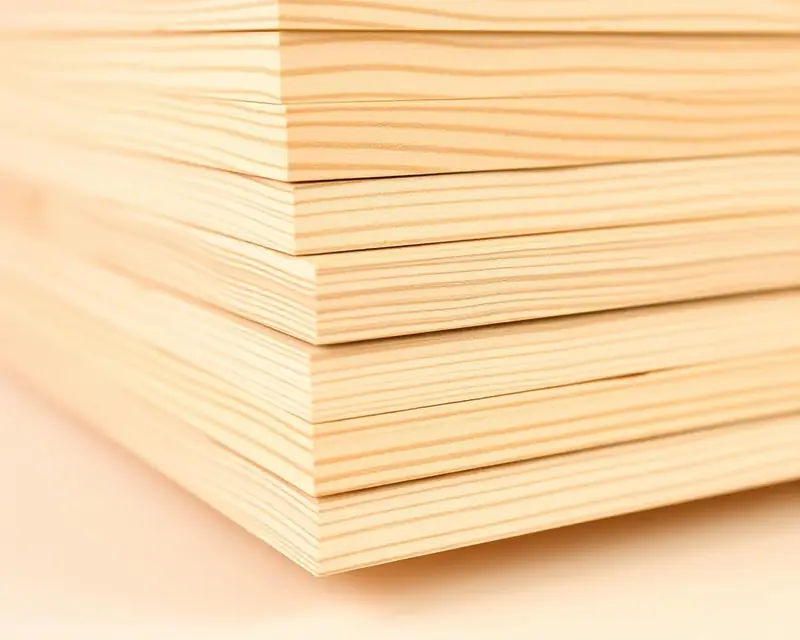
A milled tongue on one edge and a matching groove on the other, so boards lock together and hide every fastener.
View Tongue & Groove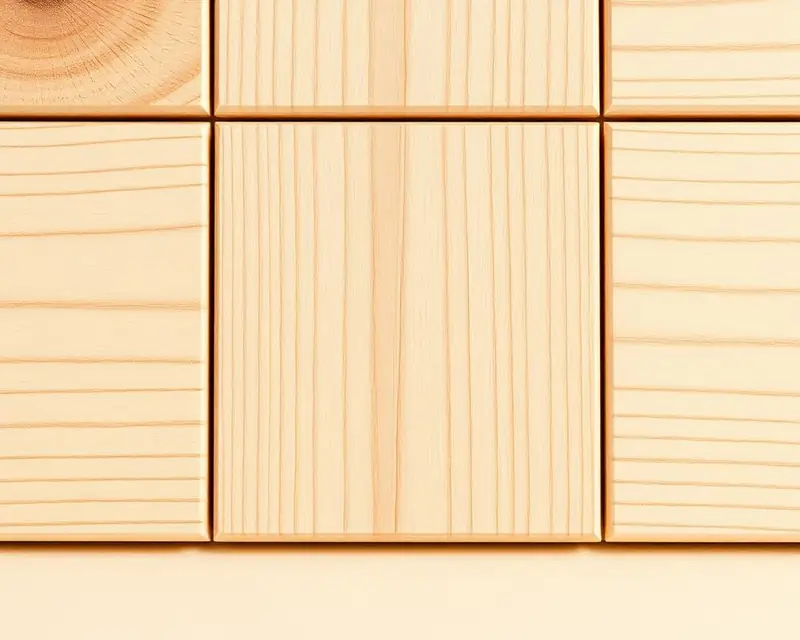
The same locking tongue and groove joint with a chamfer milled on each edge, giving a crisp V-shaped shadow line at every seam.
View V-Joint
An L-shaped rabbet cut into each long edge so boards lap over one another and sit flat, leaving an even reveal at every joint.
View Shiplap SidingOther species we mill
Thinking cypress?
Tell us the room, the square footage, and the finish you are after. We will tell you straight whether this is the right species for the job.
Locally yours — Ocala, FL.